Adorable dogs and pushing your luck: not a combo you might think of at first glance, but it’s one that works in “Spots”, a game about rolling a lot of dice with the hope of securing a full litter of dalmatians and other pups.
Game Name: Spots (2025)
Publisher: CMYK
Player Count: 1-4 Players
Playing Time: 25-30 minutes
Review Date: 10/23/2025
Reviewed By: Chuck
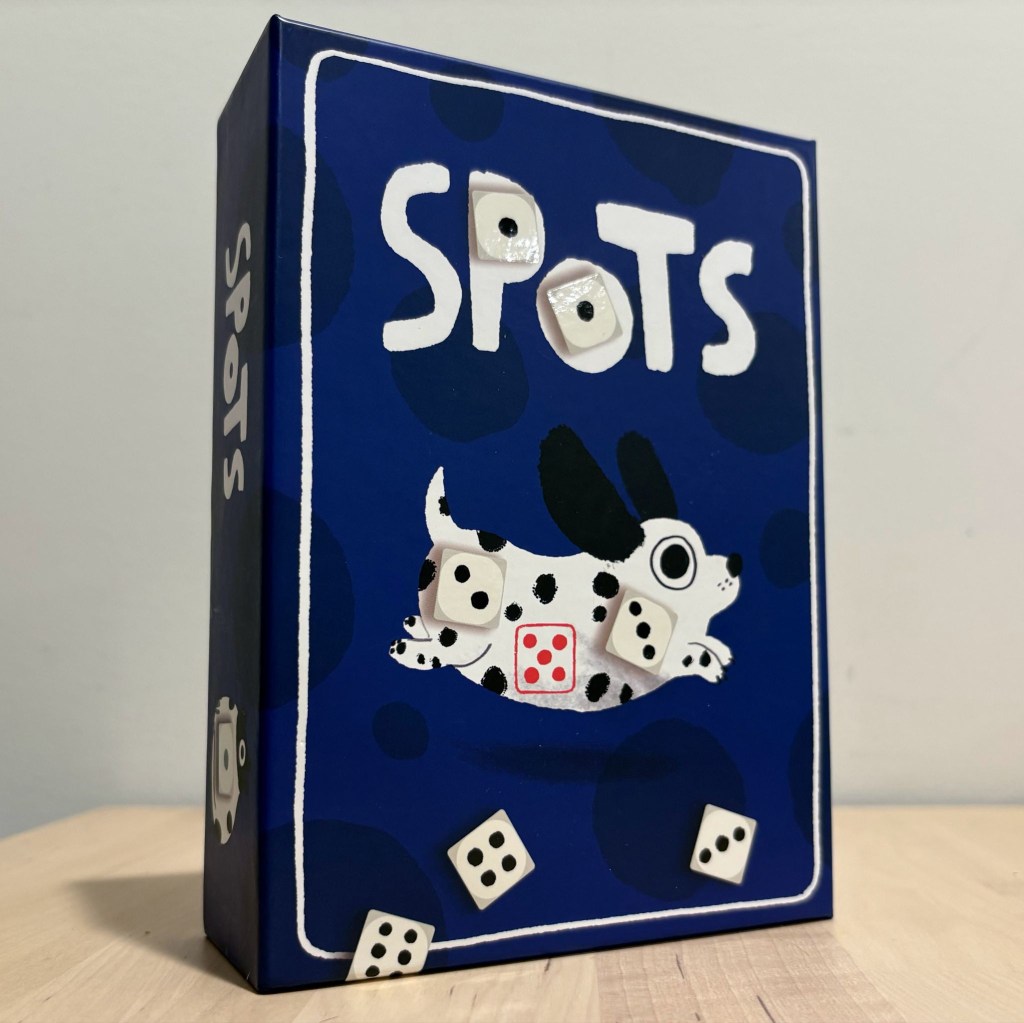
Upfront Disclaimer: Chuck purchased “Spots” with his own money; no compensation or review copy was provided. All opinions contained within are my own unbiased thoughts.
“Spots” has a weird pitch, based on the sort of thing you might point out to friends as a joke: don’t the pips on the dice look a little like the spots on a dalmatian? From this an entire game mechanic is born: roll your dice to match the pips on the dogs in front of you and try to complete a full set of six dog cards before your opponent(s). It’s not a concept that translates well into a metaphor (are we… grooming the dogs? painting them?) but “Spots” is still simple and visually appealing enough to pull it off.
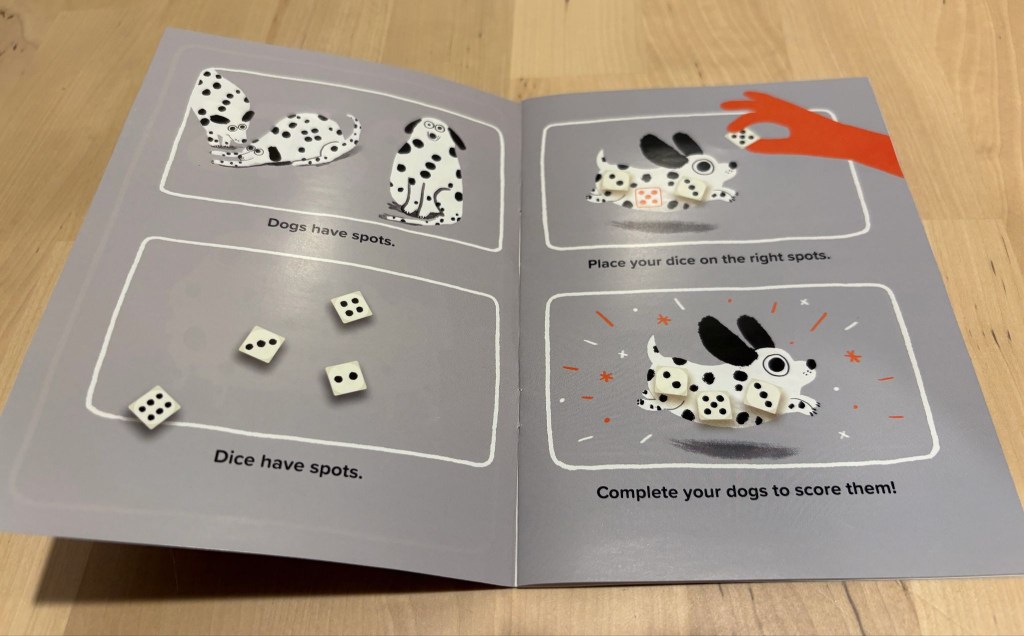
Rules are minimalist, and so are the drawings. The dice themselves have pips of mismatched sizes, adding to the goofy visual appeal of the whole package. The color scheme and design is kept limited – blue, black-and-white, with rare pops of other colors for emphasis on top of line-sketch dogs that exaggerate charming features and poses. This is an all-ages kind of game with the curb appeal to match.
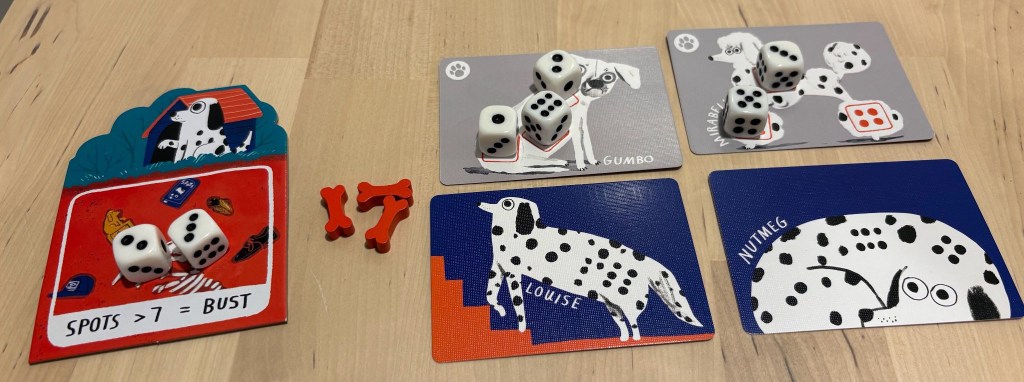
Play, too, is simple enough for kids while having just enough depth and intrigue for their parents – or kidless adults looking for a game with some gambling oomph that isn’t as intense as, say, “Skull”. The rules of any given game are dictated by six action cards selected before play begins. There’s a default set of six and a wide variety of additional cards to mix in on successive playthroughs to keep things fresh. Actions will have dog-command or dog-behavior names like “Dig”, “Roll Over”, or “Catch”; their actions will involve rolling or re-rolling dice. Players “use up” actions when they take them, so the next player won’t be able to take that action until all actions have been used and reset.
This approach to the game’s overarching rules is a great, clever way to make no two games feel exactly the same; your “safe” and “risky” options may shift on you from one round or game to the next, and everyone stays on the same footing of trying to gauge how best to navigate any particular run. You can take what seems like your opponent’s best move away from them, but they can do the same to you on their turn, and how you define “best” is going to change once you both have a few more dogs and a clearer sight of the finish line.

There are two places for each player to place their dice rolls: either on their dogs, or in their yard. Dogs have a random assortment of specific rolls; the yard can be used to “bury” dice rolls that don’t match, but can only hold a total value of seven or less pips at any time. If you push your luck too hard and go over that number, you lose all your placed dice, meaning you have to reset any dogs you haven’t officially scored yet. Add in some cute bone tokens that you can use to re-roll, and that’s about it for rules and components.
Everything comes together into a fast, surprisingly strategic game of timing and careful luck-pushing. Any given game can take on a “tortoise vs hare” quality, where one player conservatively cashing in their scores and only taking minimal risk can stay close to a player who wins and loses big from one turn to the next, meaning either player can switch strategies as the game moves along to try to maximize their odds.
Even if you’re losing, there’s a great satisfaction to scoring dogs, hitting just the right roll in the moment and adding big pops of blue and orange onto your side of the table. You’re rolling lots of dice sometimes here, too – eight or more dice in a single roll – which is a rattling satisfaction all its own. The game’s engaging no matter how engaged you are with any deeper strategic considerations, a great sign for a game aiming for a wide audience.
The only issue here is with solo play. The consequence of pushing your luck in a regular game of “Spots” is losing pace with your opponents; without that consequence, it’s hard for decision-making to feel impactful. “Spots” is wonderful with two players and works just as well at three or four, but I’d skip it if you’re just looking for an individual experience.
Verdict
Regardless, “Spots” has a winning formula of charming art and play that’s quick to pick up and consistently engaging. Pushing your luck is always fun, and here there are just enough stakes to make it feel a little thrilling while still being low-stakes enough to earn sympathetic groans or cheers from your play table. Even if you’re more of a cat person, if you enjoy rolling dice, “Spots” has enough dynamics and delight to earn a place in your collection.
Likes
- Luck-pushing is consistently fun
- Rules are simple but have a lot of space for variety
- Art design is cute and delightful without being overbearing
Dislikes
- Solo play doesn’t really work
- What does it mean to “complete” a dog???
- I kind of prefer beagles to dalmatians, personally


 Rolling In The Meep
Leave a comment